Mr. Ainsley’s New Hat: A Story

“You look wonderful in that hat…”

Every morning, I step onto the balcony of my apartment with my coffee and stare at the building across the street that blocks the sunrise.

It’s probably a gorgeous sunrise, I told myself one Monday, taking a sip of coffee.

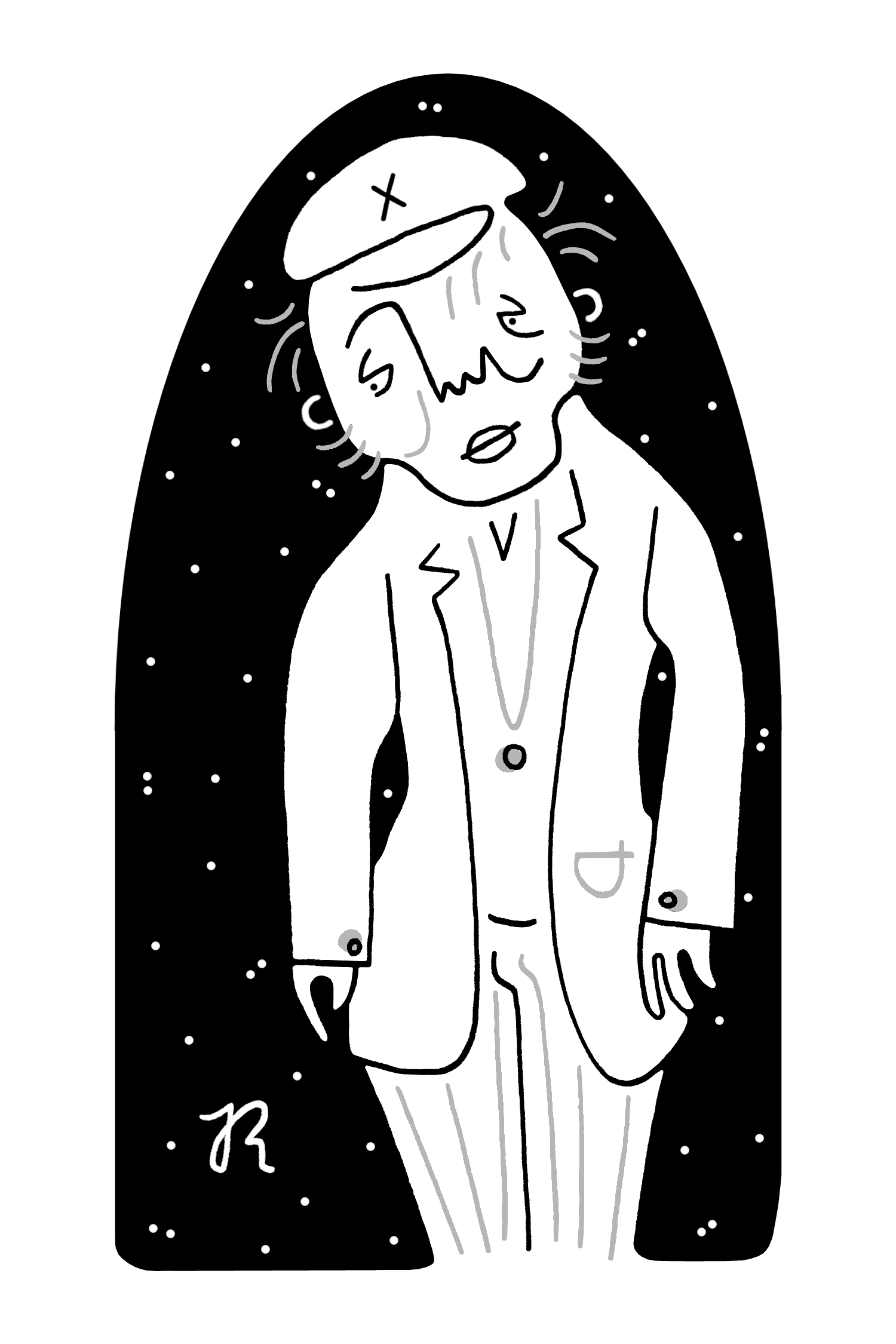
In the corner of my eye, I saw a pigeon — but it was Mr. Ainsley, my neighbor. He was standing next to the stone gargoyle on the ledge between our balconies, palms pressed flat against the wall. He was wearing a bowler hat. And a grey suit.

“Morning, Mr. Ainsley.”

He was breathing deeply.

“Nice day, isn’t it?”

He swallowed.

A gush of wind blew Mr. Ainsley’s hat off. We both watched it fall twenty-four stories to the street. A taxi drove over it.

I looked at my watch. It was 7:30.

“I have to go to work. If I’m even one minute late, Brenda will frown at me.”

I downed the rest of my coffee.

“Have a good day.”

Mr. Ainsley didn’t say anything. He was still gazing down at his hat.


On Tuesday morning, I brewed some coffee and opened the balcony door.

Mr. Ainsley was still on the ledge. He was breathing even harder, now. And rubbing the grey stubble on his chin.

“Would you like some coffee?”

I poured him a cup, reached through the balcony bars and sat it on the ledge.

I watched Mr. Ainsley meticulously step over the gargoyle … and edge closer. Several minutes later, he picked up the cup.

“It’s probably cold by now.”

Mr. Ainsley shrugged.

“I forgot to ask if you take cream and sugar.”

He seemed to be drinking it anyway.

I sat down. The sunrise was beautiful. Presumably.

“The machine got jammed yesterday when I was making copies. Brenda came into the copy room and frowned at me.”

Mr. Ainsley nodded, sipping his coffee. When he finished, he set the cup on the ledge. He shooed the pigeon off the gargoyle and maneuvered back over it.

It was close to 7:30. Dangerously close. I polished off my coffee.

“See you tomorrow.”


I was drinking from my biggest mug because it was Wednesday.

“Then I dropped the folder and pages went everywhere. One of them slid under the door of Brenda’s office and she came out frowning.”

Mr. Ainsley was half-listening. He was leaning on the gargoyle’s head, abstractedly fussing with his cufflink.

On a balcony across the street, a woman was painting a picture of something. I wondered if it was a sunrise. I stepped inside and back out with my binoculars. I focused on the painting…

It was a plain, grey rectangle.

I scanned every balcony from the top of the building to the bottom but didn’t see anything.

Then I saw a pigeon on the sidewalk and focused on that. No, it was Mr. Ainsley’s flattened bowler hat.

I sighed.

Mr. Ainsley sighed too.


“Brenda didn’t invite me to her birthday party. She invited everyone in the office except me. I gave her a pigeon pendant anyway and she frowned at me.”

Mr. Ainsley blinked. He was holding my favorite grey mug but wasn’t drinking from it. He hadn’t touched yesterday’s cup either.

I decided I wasn’t in the mood for conversation. I flipped through a book. During a sunrise, short wavelengths are scattered, leaving longer wavelengths like orange, red and yellow.

I closed the book and stared at the building across the street for a minute. Then I looked at my watch. It was 7:31.

I dropped the book and my coffee and sprinted inside.


On Friday, Mr. Ainsley was sitting on the gargoyle’s back with his eyes closed. There was a pile of dried grey pigeon shit on top of his bald head.

I nursed my coffee and told him about my dream.

“I was sitting on the balcony, drinking my coffee, when suddenly the sun rose. The building across the street was gone. I saw all the colors: orange, red, yellow. My eyes glowed orange, red, yellow. Don’t turn your head, I thought, but I did. I turned my head … and saw the gargoyle. It was frowning at me.”

I glanced at Mr. Ainsley, but he still hadn’t opened his eyes.

He must’ve been sleeping.


My alarm didn’t go off, so there was no time for coffee Saturday morning. I had one after dinner, instead. I slipped into my grey pajamas — it was a chilly night — and carried my cup outside.

As I sipped, I heard whimpering sounds. I wasn’t sure if it was pigeons or Mr. Ainsley.

I peered through the darkness at the ledge but couldn’t see anything.

I leaned over the railing and still couldn’t see anything.

“Are you there, Mr. Ainsley?”

There was no response.

I sat back down.

I was going to mention something about Brenda, but I didn’t see the point. I swallowed my coffee in silence.

The moon is superb, I told myself. I looked everywhere but couldn’t find it.


I go for a long walk alone in the park every Sunday morning. I breathe the fresh air; I feed the pigeons. I was scattering breadcrumbs when Brenda and her greyhound came bounding down the path. I hid behind a tree until they passed me.

That afternoon, I went shopping. Strolling home with a cappuccino, I passed Quinton’s Haberdashery. I stopped because there was a bowler hat in the window. I left the store twirling the hat around my finger.

The sun was setting behind my building as I approached it. I was pretty sure. I was about to look up when something landed on the ground right beside me.

It was Mr. Ainsley.

“How are you?”

Mr. Ainsley didn’t answer. So I asked him again.

Nothing.

I stared at him a minute. Then I put the new bowler hat on his head.

“You look wonderful in that hat,” said someone, walking by. Her friend nodded in agreement.

I gazed down at Mr. Ainsley…

Yes. I had to agree.

He did look good.

************

“Mr. Ainsley’s New Hat” appears in the Spring/Summer issue of Transition. Reprinted with the kind permission of the publisher.

If you enjoyed this story, please consider buying me a coffee.
I Couldn’t Get Out of Bed, So I Went for a Walk

“You wanna buy a knife?” asked a voice.

Illustration by Rolli

I couldn’t get out of bed, so I went for a walk.

There weren’t many people in Emergency. An old woman kept rubbing her breast. A sunburned man staggered up to the desk and asked the triage nurse out on a date. She pressed a red button and he vanished. I looked at the button and thought, I could use one of those.

“Have you been drinking?” the nurse asked me.

I was having trouble putting the failure of my life into words.

“Take a seat,” she said at last.

I waited two hours, three hours. The room really filled up.

I hadn’t realized I was wearing mismatched shoes.

After four hours, I got up.

“What are you doing later?” another drunk asked the nurse as I walked out the door.


There’s a beautiful park across from my apartment that’s used mostly for selling drugs and sex. One sex worker pretends to talk on the pay phone in the middle of the park, all day. If a man approaches her, she hangs up. I’ve hardly ever gone past when she wasn’t on the phone.

I walk in the park when I’m depressed because I don’t care about the danger.

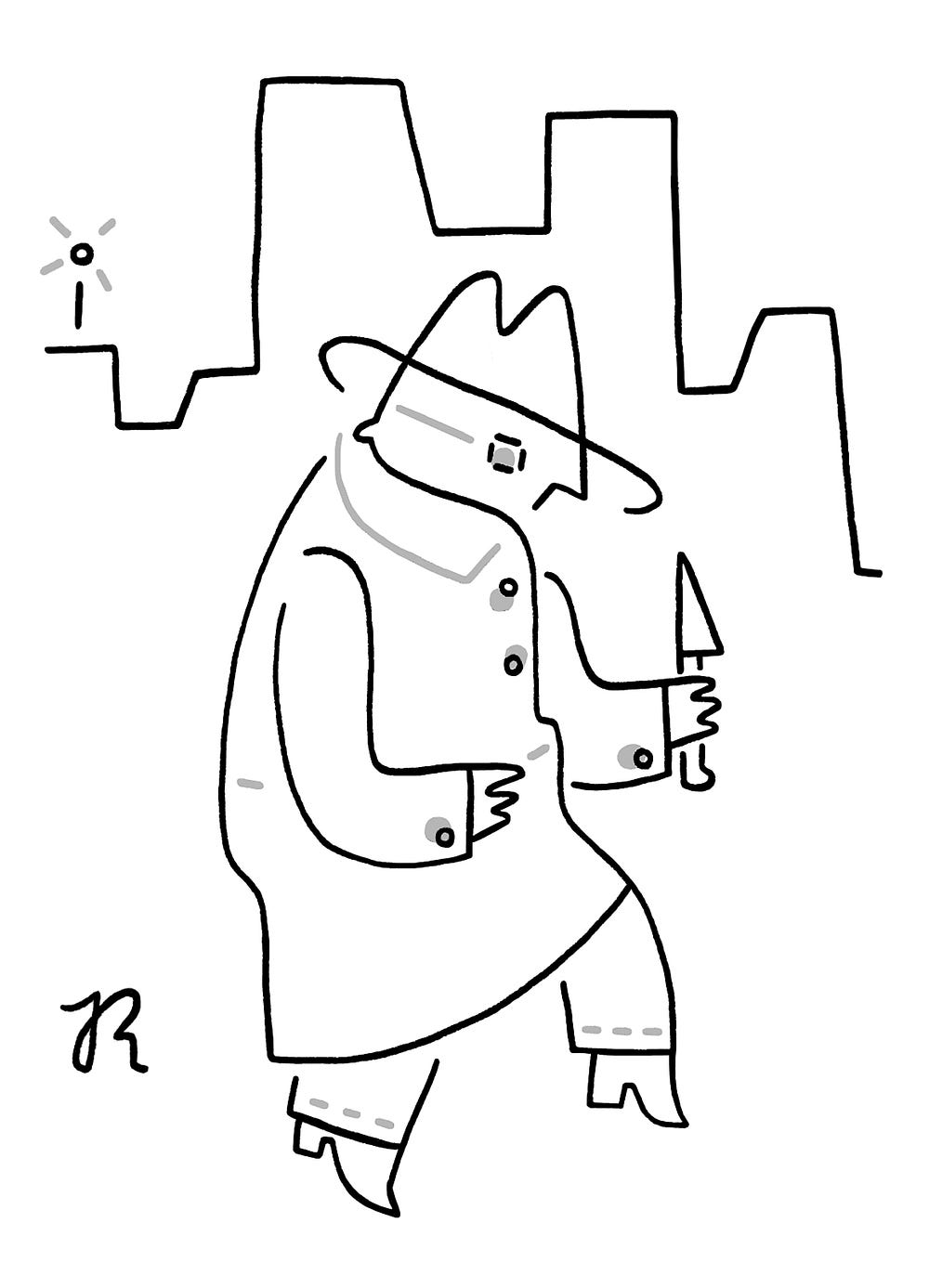
“You wanna buy a knife?” asked a voice.

I looked up. A young guy was holding out a hunting knife.

“Okay,” I said.

I pulled out my wallet. The young guy grabbed my wallet and took off.

The sex worker was watching me. I walked up to her. She hung up the phone.

“Did you see that?” I asked her.

She thought for a long time.

“No,” she said.

She picked the receiver back up.

“I love you too, Mom,” I heard her say as I walked away.


The funny thing about depression is that you forget everything that ever mattered to you. Work. Hobbies. Friends. Sex. They all float away from you like helium balloons. For a while, you wonder where they’re going and when they’ll ever come down. Then you just don’t care.

I guess it isn’t that funny.


I couldn’t afford a psychiatrist. A friend recommended a drop-in center where you could talk to volunteers. They weren’t qualified but they were good listeners.

The lady at the front desk looked up at me.

“There’s no one here right now,” she said. “But if you’d like to watch the video, I can put it on.”

I followed her into the Theatre. It was a closet with a television in it. She put a cassette tape into a VCR. I hadn’t seen a cassette tape or a VCR in years. I almost laughed.

“You think it’s hopeless,” said the woman on the screen. “Hopeless. But our love is brighter than a million stars, Gerome.”

“What is this?” I asked.

“It’s therapeutic,” said the woman, on her way out of the Theatre.

“That night in the tower, looking down at the sea… I thought about ending it all. Then, Beverly, I remembered your loveliness.”

After a few minutes, I pressed eject. The label on the tape said:

Melodramas for Depressed Persons, Cassette One

I laughed. I felt a bit better.


It was Friday night. The bars were all busy.

Emergency was busy. The line-up flowed out the door.

“Hey buddy, can you help a guy out?” asked the drunk in front of me.

“I’m a writer,” I said.

He turned back around.

It was after midnight when I finally saw a doctor.

“What’s wrong?” he asked.

I tried explaining.

“Do you hear voices?”

“Just yours,” I said.

The doctor shook his head.

“Do you feel like hurting people? Or yourself?”

I didn’t at the moment.

The doctor sighed.

“Come back when you do,” he said. Then he pressed a white button on the wall and disappeared.

I looked at the button and thought, I could really use one of those.


Pills are unpredictable. Slitting your wrists is barbaric.

I jumped off a bridge.

A lot of people jump off Millennium Bridge. It’s so high that your spine shatters when you hit the water. You don’t have to worry about drowning. I thought that was a plus.

I climbed onto the cement column and looked around.

I had a lot of memories. I just couldn’t remember them.

I looked down at the water.

“What’s up?” asked the policeman. He didn’t get too close.

“I know things seem bad right now, but it’s not as bad as you think.

“Why don’t you come back down?

“Don’t do something you’ll regret.”

I smiled. Maybe I’d regret jumping to my death.

“You’ve got a lot to live for, probably.

“You want to tell me about it?

“Don’t do something you’ll regret.”

I laughed.

I jumped.


I didn’t die. I broke every vertebra, I think, and my left arm. But I paddled with my right arm long enough for the rescuers to get to me. I did it automatically, like a cat. I wasn’t thinking.

I was in the hospital for three months. Since I was there anyway, they gave me medication.

I started to laugh more. When I laughed too much, they lowered my dosage. “It takes a while to get the right balance,” the doctor said.

When they felt I was balanced enough, they gave my clothes back. And sent me home.


“This is the end,” said the woman on Cassette Two, sobbing.

“No,” said the man. “This is the beginning — of a glorious new life of love.”

I laughed. It really was therapeutic.


I was walking in the park one afternoon. Feeling a lot better. I carried a knife now for self-defence.

The sex worker was on the payphone.

I thought, Maybe I was pessimistic. Maybe it was the depression talking. That girl might really be talking to her mother. She just loves her that much.

You never know.

“I’ll be fine, Mom,” I hear her say. As I walked on.


This story was first published (as “Melodramas for Depressed Persons”) in The Saturday Evening Post.

If you enjoyed this story, kindly consider buying me a coffee.

Drunk: A Story

The saddest people in the world get together every morning. They wait in line for the liquor store to open.

Illustration by Rolli

I can’t remember why I started drinking, even. I used to be able to remember. Then I forgot.

“You should see a therapist,” Janice told me. My sister.

“It’s not that big a problem,” I said. “Not yet.”

Janice grabbed my neck.

“Just go. It worked for Dad. And for Mom. Do you want to end up like Biscuit?”

I stared at the table.

I was pretty drunk.

We finished our drinks.

On the way out, I grabbed Janice’s neck. Or I would’ve fallen down.

I apologized.

“Thanks for breakfast,” she said.

*

Mom let me taste her margaritas. Growing up. Just one sip from each one. She could knock back quite a few.

“Doesn’t that taste awful?” she always said.

I always answered, “Yes.”

“So you’ll never drink them when you’re older?”

I always said “No.” Every time.

One night, coming back from a friend’s, I found my dad lying on his back on the lawn.

I helped him up. It was minus twenty.

“You forget how cold snow gets,” he said.

I helped him to the bedroom.

Mom was lying on the bedroom floor.

Biscuit and I picked her up and lay her on the bed next to Dad.

She opened her eyes for a second.

“Don’t tell my kids I was drinking,” she whispered.

*

Dr. Hollowood looked the part. He had hardly any hair, just a few scratches on the side. And glasses.

Though his office wasn’t like I’d pictured. There were no bookshelves or sumptuous carpets. There was no couch. Just a chair.

“Why do you drink?” he asked.

“I have no idea,” I said.

“Try to think.”

I thought as hard as I could. I was drunk.

“What are you thinking of?”

“What was the question again?”

We talked for half an hour.

Dr. Hollowood looked at his watch.

“That’s all the time we have today. It’s my daughter’s wedding.”

I was wondering about the tux.

*

The saddest people in the world get together every morning. They wait in line for the liquor store to open.

I was waiting in line.

The woman at the front of the line kept rubbing her face.

The man behind me was vibrating.

There was a young guy sitting by the door. Behind an empty guitar case. He didn’t have a guitar. I guess he was hoping for the best.

“It’s 10:01!” said the woman at the head of the line, pounding on the glass.

The door opened.

On my way in, I tossed a quarter into the guitar case.

The guy looked up and smiled.

He still had a few good teeth.

*

Dr. Hollowood crossed his legs.

“Did you have a happy childhood?”

I knew he was going to say that.

“It was pretty happy, yeah.”

“You mentioned your parents were both alcoholics?”

“Yeah.”

“I guess I was happy anyway. I was a kid. It’s strange how that works.”

“How do you mean?”

“Well… You’re unhappy as a kid. But you’ll never be that happy again.”

Dr. Hollowood touched his chin.

The door opened. A shirtless man ran into the room.

“It happened again,” he said.

*

I met Janice for lunch.

It was May 23rd. I hoped she wouldn’t remember.

“You’re looking better,” she said.

“I’ve had maybe one or two drinks,” I said proudly.

I’d actually had three.

I hadn’t been that sober in a long time.

Janice looked wistful. She poked her spaghetti wistfully.

“You know, it’s been ten years.”

I knew she was going to say that.

“Hard to believe it. Ten years since — ”

“I’ve gotta go,” I said, getting up.

I grabbed my coat.

Janice touched my hand.

“Lunch is on me,” she said.

*

It was just about 10:00.

The woman at the front of the line had almost rubbed her face off.

The guy behind the guitar case was sleeping.

The door opened.

When I got to the door, I stopped.

“I don’t want to do this anymore,” I said out loud.

I tossed two quarters into the guitar case.

The guy didn’t even wake up.

*

When I was seventeen and he was nineteen, my brother was driving us home from a party. We’d both been drinking. A car jumped over the median and hit us.

I remember … we were upside down.

I undid my seatbelt and fell down.

I undid Biscuit’s seatbelt and he fell down.

They were pretty sure his neck was already broken.

*

Dr. Hollowood and I went golfing.

The first swing, I sliced pretty bad.

Dr. Hollowood lined himself up.

“It’s a matter of confidence,” he said. “Imagine the greatest golfer in the world. You’re him — only you’re better.”

He swung.

The ball landed right on the green.

I tried it. I imagined I was the best golfer in the world. I really don’t follow golf. For some reason, I kept thinking of Jack Nicholson.

I hit the ball.

I hooked it, this time.

“Now you’re overconfident,” said Dr. Hollowood, laughing.

I lifted my club like I was going to smash it.

“You know what,” I said. “Maybe that’s it. My drinking. My confidence. I basically have zero confidence.”

“Genetics is also a strong factor,” said Dr. Hollowood.

“You’re probably right,” I said.

*

I met Janice for dinner. It was my turn to pay — usually I’d pick someplace cheap — but I was saving so much by hardly drinking that I took her to Chez Pedro.

“You look great,” said Janice.

“I’m sober,” I said. I was.

A taco shouldn’t cost $30. I ate it slowly.

Janice stared at the table.

“I’ve got some flowers in the car,” she said. “You … want to come?”

I just stared at the tablecloth. My sister stared at it, too.

“What the hell,” I said, looking up. “Let’s go.”

Janice smiled.

*

There’s a ritzy cemetery downtown, Forever Cemetery. Biscuit’s buried in the cemetery across from it.

Most of the headstones there are small and cheap. When I saw how shitty Biscuit’s looked in comparison — I’d never been there — my parents didn’t have a lot of money — I cried, just about. It was just an iron bar. The across part had dropped off.

Janice put the flowers down and cried.

I felt horrible. I needed a drink.

I hugged her.

It was bad.

It wasn’t that bad.

*

I saw Dr. Hollowood once a month. He’d recommended once a week, but that’s a lot of money.

I had an appointment. I was waiting to cross the street.

“Is my zipper open?” said the guy beside me.

It wasn’t.

He looked down.

“Is my dick out?”

I shook my head. A couple times.

The guy looked horrified.

“Then that means … I just pissed myself.”

I didn’t even laugh. It could’ve been me.

It was me. Just a few months ago.

*

I haven’t gotten drunk in a year. I haven’t had a drink in six months.

It’s not a long time.

It’s a long time.

One morning, walking past the liquor store, I was barely even tempted, I saw the guy with the case. He had a guitar now, too.

I’m not sure why. But I smiled.